

Why we did the research
The way audiences watch TV is changing. As viewing increasingly shifts from broadcast to streaming (internet-delivered TV), there is active debate about the future of digital terrestrial television (DTT) and how free‑to‑air TV will be delivered in the years to come. Any change of this scale must take into account the people most reliant on DTT today.
This research was commissioned to ensure that the voices and experiences of people living in unconnected homes, those without a broadband connection, are properly understood and heard. These viewers are more likely to be older, on lower incomes, and living with a disability, and are most at risk of being disadvantaged by changes to how TV is distributed in the future.
‘The role of Freely in unconnected homes’ explores how these audiences experience Freely today, and what role it could play in supporting a fair, inclusive transition to an internet‑delivered future for free TV.
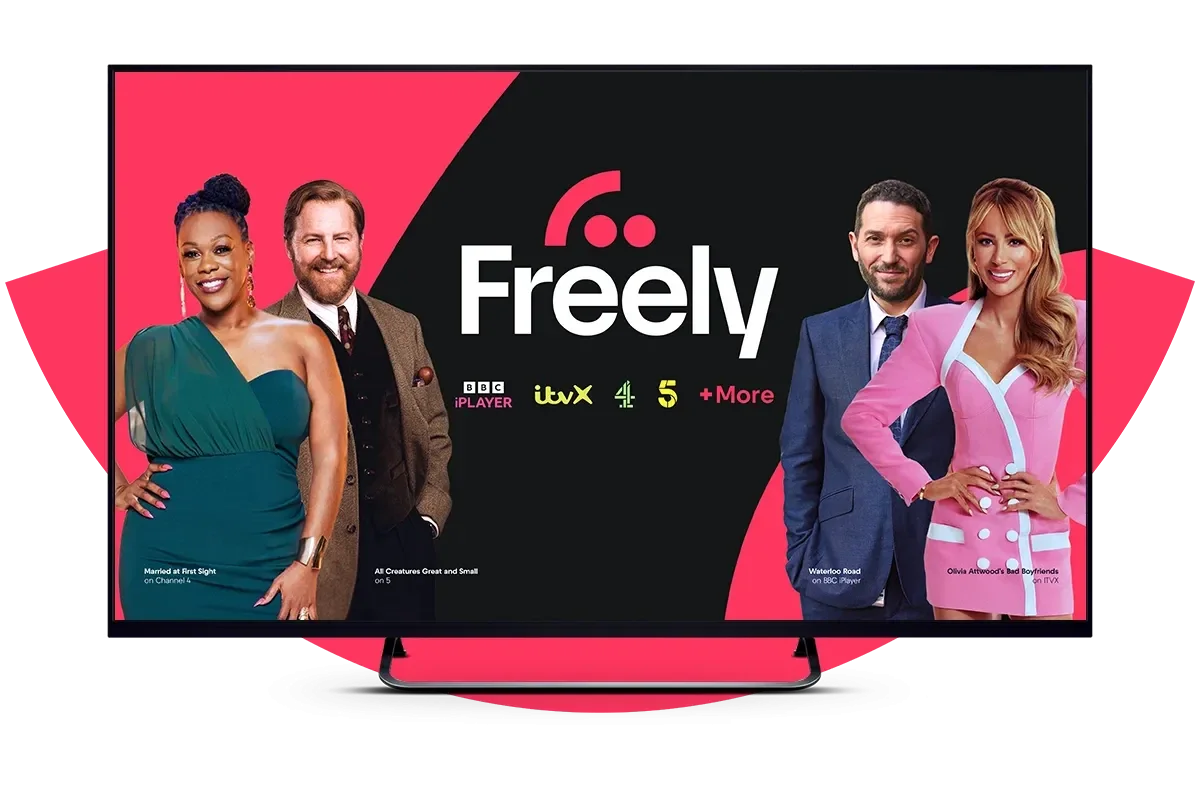
Everyone TV commissioned this research as the owner and operator of free-to-air TV platforms in the UK, existing to ensure free TV is accessible for all audiences. Freely is a new streaming platform, launched in 2024, that brings live on‑demand TV from the UK’s public service broadcasters together in one familiar, free‑to‑air experience. It works via broadband or an aerial, combining the simplicity of traditional TV with the benefits of internet-delivery to support audiences as TV distribution evolves.



What we set out to achieve
The research set out to understand whether Freely can help bridge the gap between traditional broadcast viewing and internet‑delivered television for viewers who are currently unconnected.
Specifically, it aimed to explore:
How easy and intuitive Freely is to use for people with different levels of digital confidence
Whether using Freely changes perceptions of internet‑delivered TV
How viewers might respond to a future where all TV is delivered over the internet
The extent to which Freely could help reduce feelings of exclusion or anxiety about that future
By focusing on real‑world use and attitudes, the study provides practical insight into what inclusive TV distribution could and should look like in the future.
What we found out
The research found that people living in unconnected homes are not a single, uniform group. They sit on a spectrum, from those who actively resist digital change to those who are comfortable with technology but unconnected for practical or financial reasons.
Across that broad spectrum, Freely performed strongly with all groups. Key findings were:
All participants were able to easily use Freely, and it was consistently preferred to non‑Freely smart TV environments
Freely felt familiar and reassuring, allowing people to watch TV in the ways they already understand. Its flexibility allowed participants to use the TV on their own terms and replicate existing viewing habits
Less confident viewers could continue using linear TV without disruption, while more confident viewers benefited from on‑demand and more advanced features like live pause
Freely made internet‑delivered TV feel less alien and intimidating, even for those who were sceptical about going online
While many participants had concerns about an internet‑only future, particularly around cost, most said they would take up broadband in order to keep watching TV. In that context, Freely was seen as a reassuring presence that would help them navigate change on their own terms.
What will be done with the research
The findings from this research will help inform thinking about the future of free TV distribution in the UK, particularly as the government and industry consider long‑term options beyond DTT.
The report provides evidence‑based insight into how platforms like Freely can support inclusion, continuity and confidence during any future transition to internet‑delivered TV, especially for those most at risk of being left behind.
The research will be used to shape conversations with policymakers, broadcasters and partners, and to help ensure that future decisions about TV distribution are grounded in real audience needs, behaviours and concerns.
Learnings will also help inform Freely’s ongoing development, ensuring the platform remains accessible to the least digitally confident viewers.