

The third in our award-winning collaboration with Channel 4, delving into what it is to be young in the UK, Gen Z: Trends, Truth and Trust builds on the findings of Beyond Z.
At a launch event hosted by the Royal Television Society Channel 4’s CEO, Alex Mahon, used the study findings to support an urgent call to action, rallying industry and policymakers to address shifting relationships with truth and trust in news media specifically, and information more broadly.
The study has certainly made waves and (not always accurate…) headlines, sparking national conversation. To name a few of its outings, it featured on the front page of The Times, was discussed on The Rest Is Politics and mentioned on Radio 4’s Thought for the Day, and has been written about by Marina Hyde, Giles Coren and David Mitchell among others.
What we were asked to do
Beyond Z busted many commonly held myths around the UK’s young people. The three I’s – individuality, intersectionality and inequality – mean that it is impossible to talk about ‘Gen Z’ as one. There is no ‘they.’ And while there are some generational traits, it is important to understand the difference between:
Cohort effects - a truly generational trait that makes Gen Z different and will last, and;
Lifestage effects - a product of youth, that does not differentiate them from previous generations when they were at similar ages and that will not stay with them as they mature.
So far, so simple – but if they are not a monolithic, homogeneous mass, could we at least identify what is important in making them different from each other?
As well as focusing on them, as so many studies do, could we also zoom out to look at the macro conditions and trends within which Gen Z is coming of age, to help explain commonalities and differences?
Key findings
More detail is available in the summary report. Here is the capsule version.
The eight macro themes affecting Gen Z
These socio-cultural and socio-economic trends condition the environment in which all of Gen Z in the UK is coming of age. They are:
-
While Gen Z are still broadly happy, the traditional ‘u-shaped’ model of happiness is breaking down. Contrary to historical trends, older people are now happier than younger ones. Relationships with social media are only a part of this puzzle. Myriad factors contribute, including increased feelings of loneliness, a loss of faith in social mobility, and an increasingly difficult economic reality making it difficult for many to have hope in reaching their often-modest ambitions. Despite this, many young people retain their youthful optimism.
-
For the first time on record, gender and not education is driving differences in political outlooks and, to some degree, values among Gen Z. On average, females are more liberal than males are on a range of issues. That said, males are still on average more liberal than conservative. Depending on the issue, however, somewhere between a fifth and a third of males are displaying increasingly conservative views. Gender politics is one of these areas.
-
One group in particular is being left behind. White working class males are seriously underperforming in education and in the workplace.
-
Although this trend is highly complex, issue-dependent and tricky to unpick, there are signs of a growing authoritarianism among some young people, male and female. More broadly there is disillusionment with many institutions, which are seen to be ignoring and/or failing young people.
-
Young people’s views are always the most plastic in society, a lifestage effect. It’s a facet of youth, to still be working things out. Changing one’s mind is natural. That natural youthful plasticity and uncertainty is occurring in a highly volatile societal context, a period effect. Identity politics, misinformation, media fragmentation, and civil unrest intensify the inherent confusion of coming of age. To cope, some can be dogmatically certain in their positions. Others feel lost in an ever-changing reality.
-
One of the least certain areas of their lives is how to navigate information overload, and how to judge and find the truth. Young people have a far flatter pattern of trust in different media and across the information ecosystem in general than older people do. Young people are far more likely to trust social media – posts from friends, brands, advertising, influencers – yet they generally hold mainstream media in similar regard. Older people, by contrast, exhibit clearer trust preferences, placing more confidence in established outlets. Young people often cite ‘bias’ and ‘agendas’ in the news, though this isn’t unique to Gen Z. Their confusion is more philosophical: if everyone has some bias, can anyone truly ‘know’ anything? Uncertain where bias ends and opinion starts, they grow increasingly confused as to what the truth is.
-
One of the more worrying trends is the rise of zero-sum thinking among Gen Z. Many young people see life as a zero-sum game – where one group’s success means another’s loss. Ongoing economic instability, deepening inequalities and societal divides reinforce this mindset, leaving many disillusioned about thriving in a system that feels stacked against them. Some believe they must leave others behind to get ahead. Such zero-sum thinking, especially pronounced among 18-27-year-olds and young men, hinders collaborative efforts and pits different communities against one other.
-
Confronted with declining happiness, feelings of diminished fairness and control, and with a tendency towards zero-sum thinking, it’s little surprise young people are prioritising an individualistic view of the world. They want to control what they can: themselves. This mirrors a wider societal shift towards individualism and increased personal focus. While lifestage contributes to individualism (young people often lean that way), the neoliberal society and hyper-personalised media culture that Gen Z has grown up with could make this individualistic streak a defining generational trait. Importantly, Gen Z’s individualism is not inherently ‘selfish’ or negative. It can manifest as positive self-reliance and personal growth. But among other effects, it can also exacerbate mental and physical health pressures, body-image struggles, and competitive outlooks on success.
We’ve also since been using the findings to discuss modern masculinity, gender relations and what can be done to improve them for the benefit of young women and young men.
Is it all bleak?
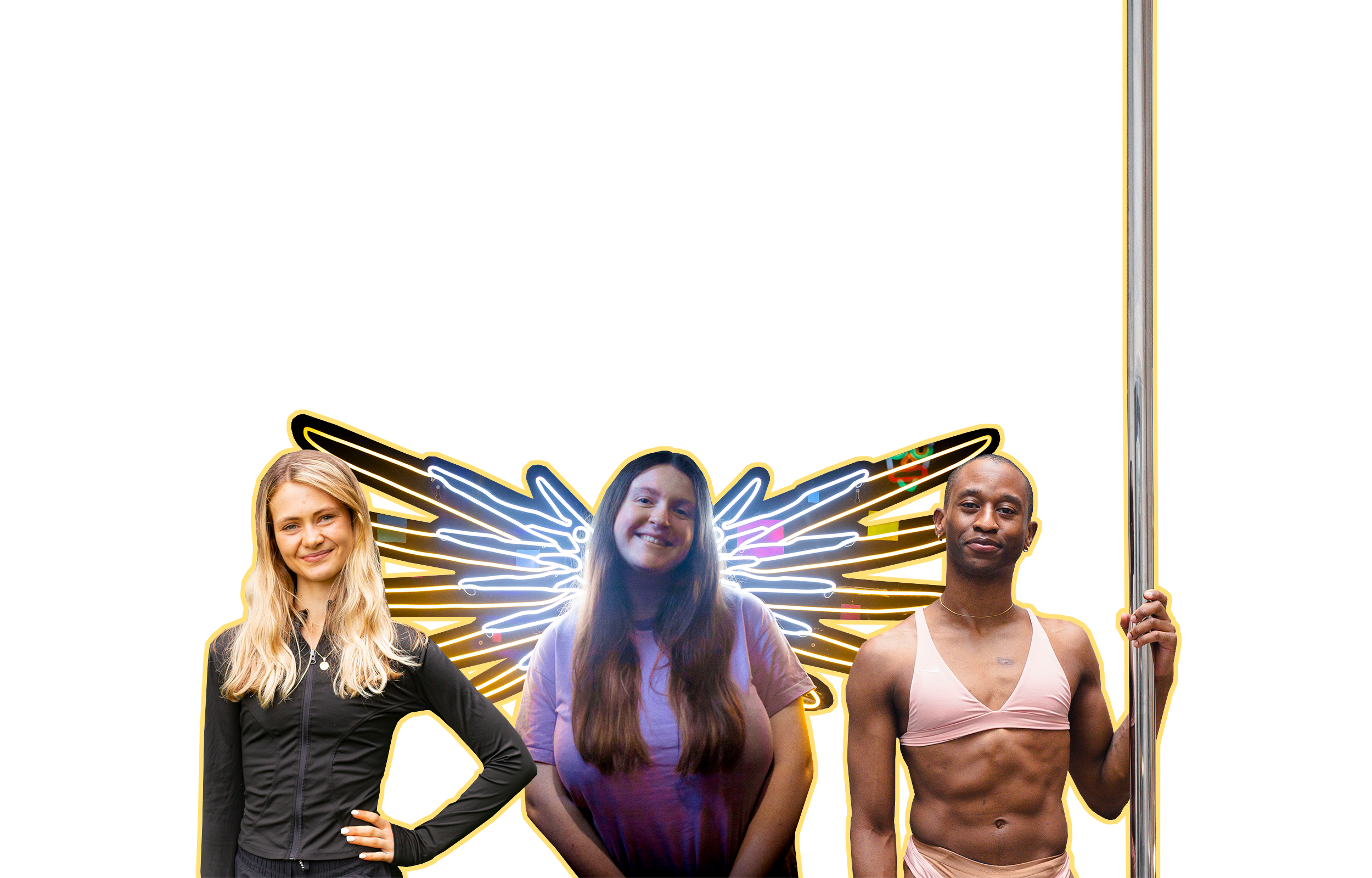
No! Despite the challenging conditions in which they are coming of age, young people have a vast amount of fun. They are experimenting later into adulthood than ever, a consequence of the ‘delayed adulthood’ trend. As part of this work we had many laughs with the young people we visited - we enjoyed a run club and coffee morning, immersed ourselves in esports culture and went pole dancing with them, among other experiences.
Decoding a generation - The six predominant Gen Z worldviews
The study identified six worldviews that are prevalent among Gen Z.
These six perspectives decode a generation often mischaracterised as monolithic, revealing instead diverse attitudes, values, and responses to the challenges they face. By emphasising meaningful distinctions rather than stereotypes, these worldviews show how each person’s outlook is shaped by a unique mix of identity, environment, and aspiration.

Girl Power: Empowered, optimistic young women
The Spice Girls’ daughters. Focused on empowerment and self-reliance, these young women live out their empowerment through their actions rather than overt activism or political feminism. They embrace independence and positivity while rejecting stereotypes and barriers to gender equality, effortlessly combining ‘traditional’ and ‘non-traditional’ interpretations of femininity. The world is their oyster, and they love eating it.

Fight for Rights: Socially conscious
Although by no means all activist, this group is deeply engaged with matters of social justice, seeing the world through this lens, prioritising equality and fairness. They are optimistic about their ability to create change and channel their energy into advocating for progressive causes.

Boys Can’t Be Boys: Traditional masculinity supporters
One fifth of this group is female. These are young people who are concerned about the erosion of ‘traditional values’ more broadly, the old anchors of life. Primarily but not exclusively, one of these erosions of certainty is a shift in gender expectations. They struggle to reconcile traditional gender roles with modern societal norms. The men in this group often perceive themselves as being under attack, feeling alienated and disconnected from progressive narratives. Not all are raging misogynists, however – some feel threatened, others concerned, others still are ambivalent or apathetic.

Dice Are Loaded: Feel hard done by
Feeling disillusioned and defeated, this group believes societal systems are inherently rigged against them. They face significant unhappiness, lacking faith in social mobility and in their ability to overcome systemic challenges. Crucially, this group is not especially deprived, highlighting the socio-economic struggles that many young people face in today’s world.

Zero-Sum Thinkers: Strongly subscribe to a winner takes it all mindset
They see life in stark terms – one group’s success means another’s loss. They lean toward radical, authoritarian, highly individualistic views, valuing hard work while critiquing welfare and shifting societal norms.

Blank Slates: Neutral, uninterested young men
This socio-politically disengaged group prioritises hobbies, friendships and everyday life over societal concerns. They are apolitical, focusing on leisure and personal enjoyment. They are young, however, and may well develop views, moving into one of the other mindsets.
There is more detail in the summary report.
How we approached the work
We used a comprehensive, multi-method approach to uncover the nuanced realities of Gen Z’s lives, behaviours, and values. The study combined quantitative, qualitative and ethnographic methods, ensuring depth and breadth, robustness and human texture in its findings.
-
The research draws on industry-leading reports and longitudinal academic data sources – such as the World Values Survey, the Social Attitudes Survey, The Policy Institute at King’s College London – to contextualise findings and validate broader societal shifts. Based on this research, we identified eight macro themes that condition the world in which Gen Z are coming of age.
-
A nationally representative online survey collected the views of 3,000 people aged between 13 and 65 (2,000 13-27-year-olds and 1,000 28-65-year-olds).
We then used advanced statistical methods to look at people through three lenses; what they do (activities), who they say they are (identity), how they think and how they feel about a range of issues , summarised in the eight macro themes (worldview). We identified worldviews as the most meaningful way of delineating differences between people.
Principal Components Analysis was used to pinpoint differences between generations, as well as distinctions within Gen Z itself. A cluster analysis grouped individuals based on shared patterns of thinking and feeling, incorporating gender and age data.
This process revealed nine ‘Worldview Clusters’ that describe the dominant mindsets influencing how people see the world, with six clusters located primarily or exclusively within Gen Z. While individuals of course have multiple worldviews, the analysis describes each cluster’s most defining perspectives.
-
A follow-up phase added richness and context to the quantitative findings – offering a detailed understanding of how Gen Z navigates their online and offline worlds.
Firstly, a digital safari was conducted with 33 people across the UK, aged 16-27. It allowed us to observe interactions with digital content, how young people engage with and evaluate content in their everyday lives.
The digital safari was combined with ethnographic visits and in-depth interviews. Here we explored participants’ digital habits, cultural touchpoints, their beliefs and attitudes, and their day-to-day lives .
These techniques revealed not just how young people think and feel, what they do, but why - and how their experiences shape their worldviews and the digital content they consume.